How to Troubleshoot AC Not Cooling: Step-by-Step Guide

Table of Contents
Safety Precautions Before You Start Troubleshooting
Check Your Thermostat Settings and Calibration
Inspect and Clean Your Air Filter
How to Clean AC Condenser Coils
Troubleshoot AC Not Cooling by System Type Standard Split AC Systems Heat Pump Systems Window and Portable Units
Standard Split AC Systems
Heat Pump Systems
Window and Portable Units
Diagnostic Sounds and Smells: What They Tell You
When to Call an HVAC Professional
Preventative Maintenance Checklist
Last Updated: August 24, 2026
Safety Precautions Before You Start Troubleshooting
Before troubleshooting, understand that AC systems operate under pressure and involve electrical components that can cause serious injury. Never work on a system you're not comfortable handling.
Turn off power at the thermostat and circuit breaker. Wait at least five minutes before touching components to allow capacitors to discharge safely (osha.gov). Wear work gloves when inspecting outdoor units to protect against sharp fins. Never stick fingers into the condenser coil area or attempt to refill refrigerant yourself, refrigerant handling requires EPA certification.
Avoid working during extreme heat, which makes diagnosis harder. If you feel uncertain about a repair, stop immediately. Attempting complex fixes without proper training can damage your system and void warranties. Air Express HVAC LLC's 24/7 availability means professional help is always accessible.
Watch Out Never attempt to work on a system that's actively refrigerating or under pressure. A refrigerant leak exposure can cause frostbite and serious injury ([the CDC](https://www.cdc.gov/niosh/index.html)). If you suspect a leak, evacuate the area and call a professional immediately.
Check Your Thermostat Settings and Calibration
Your thermostat is often the culprit when AC isn't cooling properly. Confirm it's set to "Cool" mode and that the desired temperature is lower than the current room temperature. Your system won't run if the thermostat thinks the house is already cool enough.
Check for low battery indicators on battery-powered models and replace batteries if needed. Test responsiveness by lowering the temperature setting by five degrees, your system should kick on within 30 seconds. If nothing happens, your thermostat may not be communicating with your air handler or outdoor unit.
Thermostat calibration issues can prevent cooling. If your thermostat displays one temperature but a separate thermometer shows a different reading, the sensor may be miscalibrated. Some programmable thermostats allow manual calibration through their menu settings. Consult your manual or contact a professional.
Check the thermostat's location. If it's in direct sunlight, near a heat source, or in a drafty area, it may read incorrectly. Relocating it or installing a heat shield can resolve this issue.
Pro Tip If your thermostat has a "Hold" or "Vacation" mode activated, your system may not respond to temperature changes. Check your thermostat's active settings before assuming there's a hardware problem.
Inspect and Clean Your Air Filter
A dirty or clogged air filter is one of the most common reasons AC systems fail to cool effectively. Locate your air filter in a return air duct or blower compartment. Check its condition by holding it up to light, if light barely passes through, replacement is needed.
Most standard filters require replacement every 30 to 90 days, depending on household factors like pets and dust (the EPA). During summer, check monthly. Never attempt to clean and reuse disposable fiberglass filters. Some reusable electrostatic filters can be gently vacuumed or rinsed, but consult your filter's documentation first.
When replacing your filter, note the size and MERV rating printed on the frame and purchase the exact same specifications to maintain proper airflow. After installation, feel the return air vents, airflow should feel stronger than before.
Key Takeaway A clean air filter is the easiest and most impactful maintenance step you can take. Replacing it regularly prevents airflow restriction and keeps your system cooling efficiently.
How to Clean AC Condenser Coils
Your outdoor condenser coil releases heat from your refrigerant. When clogged with dirt, leaves, and pollen, heat transfer becomes inefficient and your system struggles to cool.
Turn off power at the circuit breaker and wait at least 10 minutes for the unit to cool. For light dust, use a soft brush to gently brush the coil fins from inside outward. For stubborn buildup, use a garden hose on low setting, spraying perpendicular to the fins to push debris out. Avoid pressure washers, which can bend fins and damage the coil.
Allow the unit to dry completely before restoring power. Remove nearby debris and vegetation, ensuring at least two feet of clearance on all sides for proper airflow.
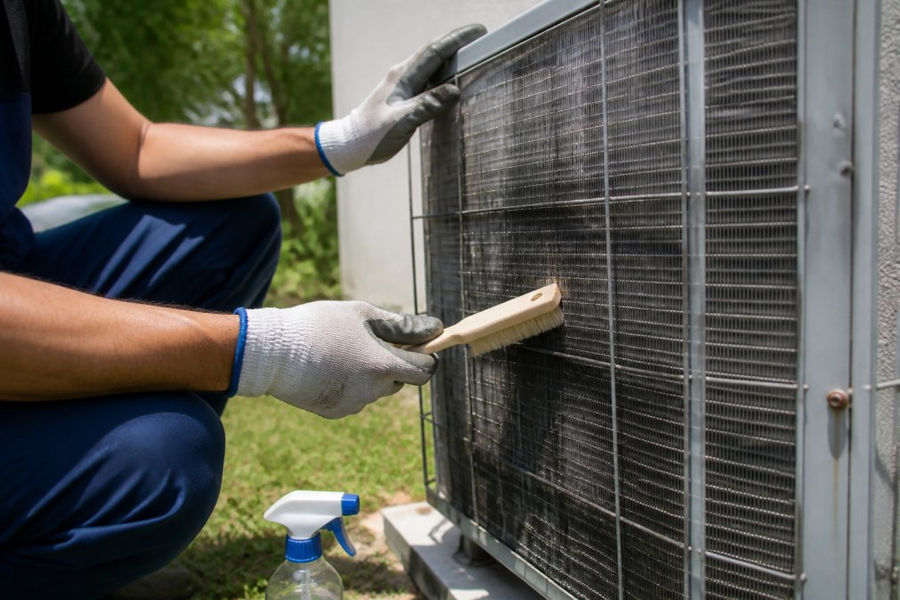
If your condenser coil shows corrosion, rust, or significant damage, professional service is needed. Air Express HVAC LLC can inspect and service all condenser coil types.
Troubleshoot AC Not Cooling by System Type
Different AC systems have distinct architectures. Understanding your system type helps you identify issues more accurately.
Standard Split AC Systems
Standard split systems consist of an indoor air handler and outdoor condenser unit connected by refrigerant lines. Check that both units have power and listen for the outdoor compressor running when you lower your thermostat. If the outdoor unit doesn't start, the issue may be electrical, a tripped breaker, or a failed compressor.
Inspect refrigerant lines for signs of leaks, such as oily residue or hissing sounds. Check your indoor air handler for ice buildup on the evaporator coil, which indicates restricted airflow or low refrigerant, both require professional service.
Heat Pump Systems
Heat pump systems provide both heating and cooling by reversing refrigerant flow. Verify your thermostat is in "Cool" mode, not "Heat" or "Auto." Heat pumps in heating mode will never cool your home.
Check for ice or frost on the outdoor unit during cooling season. Some frost is normal, but heavy ice accumulation indicates a malfunction. If ice persists after a defrost cycle, professional service is needed.
Window and Portable Units
Ensure the unit is properly sealed in the window frame, air leaks reduce cooling efficiency significantly. Check the air filter, typically located on the front or side, and clean or replace it every two weeks during heavy use.
Verify the thermostat is set to a lower temperature than the current room temperature. Ensure the unit has access to fresh outside air through the window opening or vent.
Diagnostic Sounds and Smells: What They Tell You
Your AC system communicates problems through sounds and odors. A hissing or bubbling sound from your indoor air handler often indicates a refrigerant leak. Hissing from the outdoor unit suggests a more serious compressor issue. Stop running the system and call a professional immediately.

A grinding or squealing noise from the outdoor unit typically means the compressor is failing or a fan motor bearing is worn. These sounds indicate imminent mechanical failure. A clicking sound from your thermostat during startup is usually normal, but repeated clicking throughout operation suggests an electrical relay problem.
A musty smell indicates mold or mildew growth in your ductwork or evaporator coil, requiring professional cleaning. A burning smell suggests electrical overheating, a failing motor, or debris in the system, turn off your AC immediately. A refrigerant smell (similar to ether) indicates a significant leak; evacuate the area and call for emergency service.
Normal operation produces minimal sound, a gentle hum from the compressor and air moving through vents. Anything louder or unusual deserves attention.
When to Call an HVAC Professional
Call a professional if you suspect a refrigerant leak. Refrigerant is a controlled substance, and only certified technicians can handle it legally. If your evaporator coil is frozen or shows ice buildup, professional service is needed, as ice indicates a deeper problem like low refrigerant or a failed expansion device.
Electrical issues require professional attention. If your system won't respond to thermostat adjustments, you hear clicking or buzzing, or you notice a burning smell, don't attempt repairs. If your compressor isn't running or you hear unusual grinding sounds, professional service is essential.
When troubleshooting doesn't resolve the problem, a professional can run diagnostic tests using refrigerant gauges, electrical testers, and thermal imaging cameras to reveal hidden problems.
Air Express HVAC LLC provides 24/7 professional service for all AC types and brands. Our team diagnoses complex issues quickly and recommends cost-effective solutions. With our 10-year worry-free parts and labor guarantee, you have confidence that repairs are done right.
Best For Homeowners who've completed basic troubleshooting steps but still have cooling issues, or anyone uncomfortable working with electrical or refrigerant systems should contact a professional immediately.
Preventative Maintenance Checklist
Regular maintenance prevents most AC cooling failures and extends system lifespan. Start your routine before cooling season begins, typically in late spring.
Maintenance Task | Frequency | DIY or Professional |
Replace or clean air filter | Every 30-90 days | DIY |
Inspect thermostat settings | Monthly | DIY |
Clean outdoor condenser coil | Annually or as needed | DIY (light cleaning) or Professional |
Check refrigerant lines for leaks | Annually | Professional |
Inspect ductwork for leaks | Annually | Professional |
Test system responsiveness | Monthly | DIY |
Professional system inspection | Annually (before cooling season) | Professional |
Clean or replace evaporator coil filter | Annually | Professional |
Check your air filter monthly during cooling season. Inspect your outdoor condenser unit quarterly, removing leaves and debris. Test your system monthly by lowering your thermostat and listening for the compressor to start. Schedule professional maintenance annually, a technician will check refrigerant levels, inspect electrical connections, test capacitors, clean coils, and verify system performance.
Document all maintenance and repairs to help you spot patterns and plan future maintenance.
When your AC stops cooling, start with simple checks: thermostat settings, air filter condition, and condenser coil cleanliness. These three steps resolve most cooling issues without professional help. If troubleshooting doesn't restore cooling, a professional inspection reveals what's actually wrong. Air Express HVAC LLC services all AC system types and brands with same-day availability. Call our team when you need reliable, professional cooling restoration backed by our 10-year worry-free guarantee.
Frequently Asked Questions
Q: Why would my AC be running but not cooling?
A: Several issues can cause your AC to run without cooling properly. The most common are a dirty air filter restricting airflow, low refrigerant levels from a leak, a malfunctioning compressor, or a clogged condensate drain line. Your thermostat settings might also be incorrect, or the outdoor condenser coils could be blocked by debris. Start by checking your air filter and thermostat, then inspect the outdoor unit. If these basic checks don't resolve the problem, contact a professional technician to diagnose electrical issues or refrigerant problems.
Q: Can a dirty air filter cause an AC to stop cooling?
A: Yes, a dirty air filter is one of the most common causes of reduced cooling performance. When the air filter becomes clogged with dust and debris, it restricts airflow through your HVAC system. This reduces the amount of cool air reaching your home and forces your system to work harder, potentially triggering a safety shutdown. Check your air filter monthly and replace it every 30 to 90 days, depending on usage and dust levels. A clean filter improves both cooling efficiency and indoor air quality.
Q: How do I reset my AC if it's not cooling?
A: To reset your AC system, start by turning off the thermostat and waiting 5 to 10 minutes. Then turn it back on and set it to cooling mode. If your system has a circuit breaker, you can also switch it off for a few seconds and back on. Some heat pump systems have a defrost mode that can temporarily interrupt cooling; check your thermostat settings to ensure you're not in that mode. If resetting doesn't restore cooling within 15 minutes, stop attempting resets and contact a professional technician, as the issue likely requires diagnostic equipment.
Q: When should I call an HVAC professional instead of troubleshooting myself?
A: Call a professional immediately if you notice refrigerant leaks, hear unusual grinding or squealing sounds from the compressor, smell burning odors, or see electrical sparks. You should also contact a technician if you've completed the basic checks (filter, thermostat, outdoor coil) and cooling hasn't improved, if your system is more than 10 years old and underperforming, or if you're uncomfortable working with electrical components. Professionals have diagnostic tools to test refrigerant levels, electrical continuity, and compressor function safely and accurately.
GIVE US A CALL
This article was written using GrandRanker


Comments