Cost to Repair Leaking Air Conditioner: 2026 Guide

Table of Contents
What You'll Need Before Calling a Technician
Cost to Repair Leaking Air Conditioner: Diagnostic and Service Call Fees
AC Refrigerant Leak Repair Cost by Component
How to Read Any Leak Repair Estimate
Refrigerant Line and Fitting Leaks
Evaporator and Condenser Coil Leaks
Compressor and Valve Leaks
Why the Same Leak Can Produce Two Very Different Quotes
Refrigerant Leak Detection Cost and Inspection Process
Air Conditioner Leaking Water Repair Cost vs. Refrigerant Leak
AC Evaporator Coil Leak Repair Cost and Replacement
Repair vs. Replace: When to Fix and When to Upgrade
Step 1: Check the Age of the System
Step 2: Identify the Refrigerant Type
Step 3: Review the Repair History
Step 4: Compare Repair Cost to Replacement Cost
What Replacement Buys You Beyond the Repair
What Repair Buys You Beyond the Fix
A Simple Decision Path
Common Mistakes to Avoid When Handling an AC Leak
Frequently Asked Questions
Last Updated: October 14, 2026
What You'll Need Before Calling a Technician
First identify the leak type: the cost to repair leaking air conditioner systems depends on whether it's refrigerant loss or water drainage.
Before calling a technician, note your system's age and brand, the leak source (indoor unit, outdoor condenser, or refrigerant lines), and whether the liquid is clear water or oily.
Don't attempt DIY fixes on refrigerant leaks, handling requires EPA certification, and mistakes can damage your system and create legal liability.
Cost to Repair Leaking Air Conditioner: Diagnostic and Service Call Fees
The first expense is the diagnostic fee, charged to inspect your system and identify the leak source. Costs vary with system complexity and inspection time.
A basic service call includes:
System inspection and pressure testing
Leak detection using specialized equipment
Visual assessment of coils and connections
Many HVAC companies charge a flat diagnostic fee; others apply it toward repairs or waive it if you book immediately, ask upfront when scheduling. The service call is separate from repair costs, and emergency calls outside business hours typically cost more.
At Air Express HVAC LLC, we offer 24/7 availability throughout Southwest Florida, so our technicians can diagnose your air conditioner leaking issue any time.
AC Refrigerant Leak Repair Cost by Component
The cost to repair leaking air conditioner systems depends entirely on which component failed. Each part requires a different repair approach, parts cost, and labor time. Below is how the work breaks down, plus the line items a transparent estimate should show.

How to Read Any Leak Repair Estimate
Before comparing quotes, make sure each separates these line items, a vague lump-sum number hides where the money goes.
Diagnostic / service call fee, typically a flat charge to inspect the system and confirm a leak exists
Leak detection labor, time spent with electronic detectors, pressure testing, or dye tracing to pinpoint the source
Repair labor, hours to access, cut, braze, or replace the failed part
A quote omitting evacuation, the filter drier, or the recharge isn't comparable to one that includes them. Ask for missing lines in writing.
Refrigerant Line and Fitting Leaks
Refrigerant lines connect your indoor and outdoor units. These copper tubes carry pressurized refrigerant and are vulnerable to vibration, corrosion, and impact.
Fitting leaks are the most common and least expensive to repair.
Line leaks are more serious: the damaged tubing section must be cut out and a new one brazed in.
Corrosion causes many line leaks, especially in coastal salt air, and it spreads.
Evaporator and Condenser Coil Leaks
Coil leaks are expensive because coils are complex. Your system has two: the evaporator coil inside and the condenser coil outside.
Evaporator coil leaks develop inside the indoor unit and are hard to access.
Condenser coil leaks occur in the outdoor unit, where coils face weather, salt-air corrosion, and storm debris.
Coil replacement means swapping the entire assembly, labor-intensive work requiring evacuation, coil removal, new coil installation, filter drier replacement, and a full recharge.
Compressor and Valve Leaks
Compressor leaks are rare but extremely expensive. The compressor pumps refrigerant through the whole system, so when it leaks, replacement is usually the only option, and it's the costliest part in the system.
Valve leaks occur at connection points on the compressor and other components, including Schrader valves and service valves.
A leaking compressor often signals the system is near end of life; many technicians recommend full replacement, since compressor-swap labor approaches new-condenser install labor, and you'd still have an aging system.
Why the Same Leak Can Produce Two Very Different Quotes
Two contractors can look at the same leaking evaporator coil and hand you quotes that differ by hundreds of dollars. The gap usually comes from:
Repair vs. replace on the coil, a sealant patch is cheap but temporary; a new coil is expensive but permanent
Refrigerant type, older R-22 systems cost far more to recharge than systems using current refrigerants, because R-22 is no longer produced and supply is limited
How much refrigerant was lost, a slow leak that has been running for months needs a full recharge; a fresh leak may need only a top-off
Pro Tip When you compare estimates, put them side by side using the line items above. The lowest total is not always the lowest cost, a quote that skips evacuation or the filter drier will cost you more later when the system fails again.
Refrigerant Leak Detection Cost and Inspection Process
Finding a refrigerant leak requires specialized equipment and trained technicians. Refrigerant is odorless, and visual inspection alone won't find most leaks.
Technicians use several detection methods:
Electronic leak detectors sense refrigerant vapor and pinpoint leak locations with high accuracy
Pressure testing measures system pressure to confirm leaks exist
Dye tracing adds fluorescent dye to refrigerant, then uses UV light to spot leaks
Electronic detection is fastest and most common; pressure testing confirms a leak exists; dye tracing is thorough for small leaks but slower.
Inspection typically takes 30 minutes to two hours depending on system size and leak severity, with technicians accessing both units and checking all connection points, coils, and line runs.
Air Conditioner Leaking Water Repair Cost vs. Refrigerant Leak
Many homeowners confuse water leaks with refrigerant leaks. They're completely different problems with different solutions.
Water leaks happen when the drainage system fails.
Common water leak causes include:
Clogged condensate drain line (algae or debris blockage)
Cracked or broken drain pan
Disconnected condensate line
Water leak repairs are usually inexpensive, clearing a clogged drain line might take 15 minutes, and even drain pan replacement costs far less than refrigerant work.
Refrigerant leaks are different: pressurized fluid escaping sealed components means lost cooling capacity. Water leaks don't directly affect cooling, though they can damage your home.
AC Evaporator Coil Leak Repair Cost and Replacement
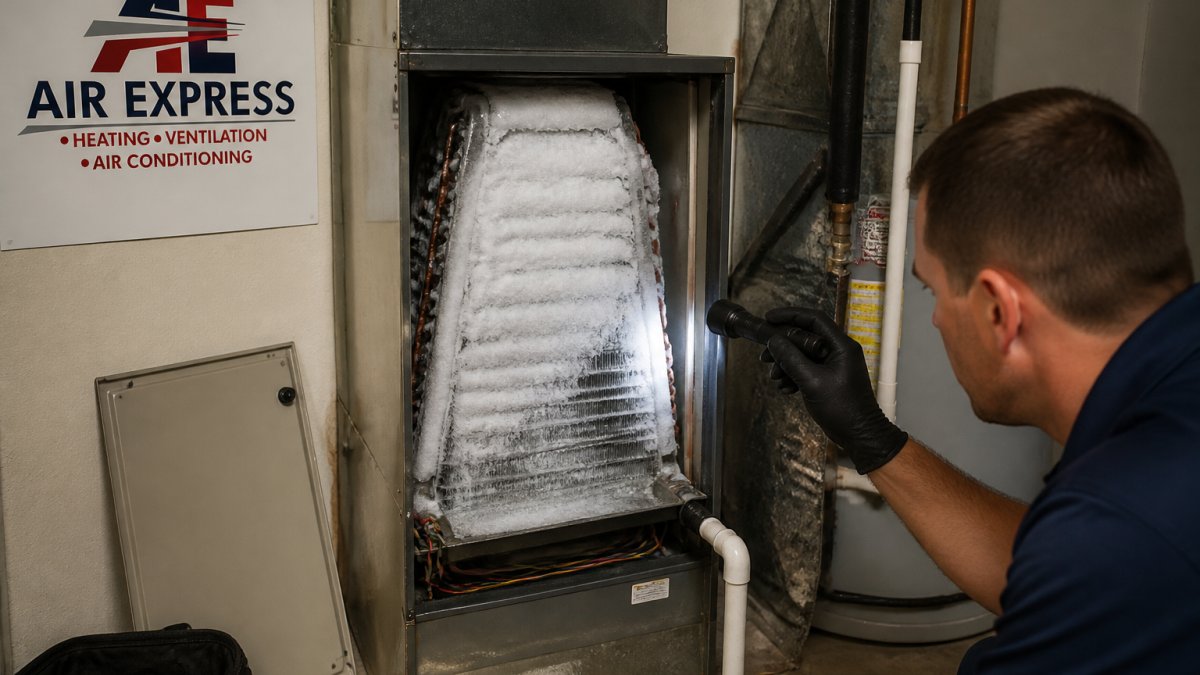
Evaporator coil leaks deserve special attention because they're common and expensive.
When it leaks, refrigerant escapes into your home, cooling performance drops, and the system may run constantly without reaching your target temperature.
Small leaks can sometimes be sealed with epoxy, but that's temporary, sealed coils often leak again because the underlying corrosion continues.
Age matters: on a 10-15 year old AC, coil replacement might cost more than a new system, while newer systems are usually worth repairing.
Repair vs. Replace: When to Fix and When to Upgrade
Should you repair the leak or replace the system? The common "replace if the repair costs more than half of a new system" rule is a starting point, not an answer. A practical framework weighs four factors: system age, refrigerant type, repair history, and repair cost relative to replacement.
Step 1: Check the Age of the System
Find the manufacture date on the outdoor condenser's data plate:
Under 10 years old, repair is usually better, especially for a fitting or line set leak
10 to 15 years old, genuinely close; weigh the other three factors
Over 15 years old, replacement usually wins, since another major repair is likely within a few years
Step 2: Identify the Refrigerant Type
The data plate also tells you which refrigerant the system uses. This matters more than most homeowners realize.
R-22 (often labeled HCFC-22), no longer produced for new equipment, and remaining supply is expensive. A recharge on an R-22 system can cost several times what the same recharge costs on a current-refrigerant system. If your system uses R-22 and needs a major leak repair, replacement is often the better long-term financial choice.
R-410A or newer refrigerants, widely available and reasonably priced, so refrigerant cost is less of a factor in the repair-vs-replace decision.
If unsure, the model number and data plate tell a technician immediately.
Step 3: Review the Repair History
Pull together your service records, or ask your technician about past visits.
One leak, no other repairs, repair is reasonable
Two or more repairs in the past two years, the system is telling you something; repeated failures usually mean more are coming
A previous leak repair that failed, a second leak in the same area suggests the underlying problem (corrosion, vibration, poor original installation) was never solved
Step 4: Compare Repair Cost to Replacement Cost
The 50% rule is a useful screen, but apply it to the right numbers:
Repair cost, the full estimate, including parts, labor, evacuation, filter drier, and recharge
Replacement cost, the installed price of a comparable new system, not equipment alone
If repair is a small fraction of replacement, repair. If it approaches half, and the system is old, uses R-22, or has a repair history, replacement usually makes more financial sense.
What Replacement Buys You Beyond the Repair
A new system brings more than a fix for the current leak:
Higher efficiency, modern units use less energy per unit of cooling, lowering summer utility bills
A new warranty, parts and labor coverage resets
Predictable reliability, no lingering worry about the next failure
What Repair Buys You Beyond the Fix
Repair isn't always wrong, even on an older system:
Lower upfront cost, you keep cash in hand today
Time to plan, a repair can buy you a season or two
Right-sized decision, replacing a young, healthy system wastes a good unit
A Simple Decision Path
Is the system under 10 years old and free of other major issues? → Repair.
Is the system over 15 years old, or does it use R-22, or has it had multiple recent repairs? → Lean replace.
Is the repair cost approaching half the installed cost of a new system? → Lean replace.
None of the above, but you are still unsure? → Get a written repair estimate and a written replacement estimate side by side, and compare them line by line.
Key Takeaway There is no single right answer for every home. The framework above narrows the decision to four concrete inputs, age, refrigerant type, repair history, and cost ratio, so you can make the call with numbers instead of a gut feeling.
When on the fence, get a professional assessment: ask for written repair and replacement estimates with line items broken out, so you can see exactly what each path costs and includes.
Common Mistakes to Avoid When Handling an AC Leak
Most homeowners make predictable mistakes when their AC starts leaking. Knowing these helps you avoid costly problems.
Accepting vague estimates. A good estimate lists leak location, repair method, parts, and labor hours.
Choosing the cheapest option without considering quality. The lowest price sometimes means lowest quality.
Skipping maintenance. Regular maintenance prevents many leaks: dirty coils corrode faster, clogged filters stress the system, and annual service catches small problems before they get expensive.
Delaying repairs during hot weather. When temperatures spike, HVAC companies are slammed.
Frequently Asked Questions
How much does it cost to repair an AC refrigerant leak?
Repair costs depend on leak location, refrigerant type, and system age. A diagnostic fee typically ranges from $100-$200 to identify the leak. Once located, repairs for refrigerant line fittings or small leaks may cost $300-$800, while evaporator or condenser coil replacement can exceed $1,500. Labor and refrigerant recharge add to the total. Contact Air Express HVAC for a specific estimate based on your system's condition.
Should I be worried if my air conditioner is leaking water?
Water leaking from your AC unit usually indicates a clogged condensate drain line, not a refrigerant leak. This is less expensive to repair than a refrigerant leak and typically costs $150-$300 for cleaning or line replacement. However, if water pools inside the indoor unit, it can damage the evaporator coil and lead to mold growth. Have a technician inspect it promptly to prevent costlier repairs down the road.
What is the $5,000 AC rule?
The $5,000 rule is a guideline some homeowners use to decide between repair and replacement: multiply the age of your system (in years) by the repair cost. If the result exceeds $5,000, replacement may be more economical than repair. For example, a 10-year-old system with a $600 repair costs 10 × $600 = $6,000, suggesting replacement. However, this rule varies by individual circumstances, system efficiency, and warranty coverage.
Can an air conditioner refrigerant leak be repaired, or does the unit need to be replaced?
Most refrigerant leaks can be repaired if caught early. Small leaks in refrigerant lines or fittings are often fixable. However, if the evaporator coil or compressor is leaking, replacement of that component may be necessary and costly. If your system is old or has had multiple repairs, replacement becomes more worthwhile. A professional HVAC technician can assess whether repair or replacement makes sense for your specific situation.
When your air conditioner starts leaking, the cost depends on what failed and how quickly you address it. Small problems caught early cost far less than major damage from delayed repairs. Air Express HVAC LLC offers 24/7 emergency service throughout Southwest Florida, with transparent pricing and our 10-year worry-free guarantee on all parts and labor. Call us to diagnose your leak today and get a detailed estimate before any work begins.
GIVE US A CALL

Comments