Are VOCs in Your Fort Myers Home Making You Sick?

Last Updated: November 1, 2026
Quick Summary
Volatile organic compounds (VOCs) are chemicals that evaporate into indoor air and can build up in tightly built homes. Health risk depends on how much is present, how long you breathe it, and how often you are exposed, and researchers have linked chronic exposure to respiratory, neurological and cardiovascular harm.
Indoor VOC levels were often 10 times higher than outdoor levels in one Los Angeles County study.
Risk depends on concentration, duration of exposure and how frequently you breathe the air.
Formaldehyde contributed most to cancer and noncancer risk estimates in a 2024 residential review.
Wall painting was identified as the highest-exposure stage of residential VOC exposure.
Open windows, run exhaust fans and choose low-VOC paints to reduce indoor VOC levels.
Table of Contents
What Volatile Organic Compounds Are and Why They Build Up Indoors
Volatile organic compounds (VOCs) are carbon-based chemicals that evaporate readily into the air at normal room temperature. The dangers of volatile organic compounds in homes start with a simple problem: the air inside a house is often more polluted than the air outside it. Indoor VOC concentrations can be substantially higher than outdoor concentrations. The Los Angeles County Fire Department's Health Hazard Assessment program reports that indoor levels were often 10 times higher than outdoor levels, though it also says most measured VOCs fell below health-based risk limits (LA Fire Health Data Brief 8 on VOC levels in indoor and outdoor air).
Homes trap these compounds because newer houses are built tight. Researchers measured 54 VOCs and ventilation rates in four newly manufactured houses over 2 to 9.5 months after construction (Hodgson et al. study on VOC concentrations in new manufactured houses). Less fresh air moving through the home means chemicals released from furniture, flooring and finishes stay put.
The Health Dangers of Volatile Organic Compounds in Homes
The health risk depends on how much is present, how long you are exposed and how often you breathe it in. The Minnesota Department of Health explains that the risk from inhaling a chemical is tied to those three factors (Minnesota Department of Health guidance on VOCs in your home). A brief whiff of a new product is a very different exposure from months of breathing the same air in a closed bedroom.
Recent research has linked chronic indoor VOC exposure to respiratory, neurological and cardiovascular harm, among other adverse outcomes (2026 Scientific Reports assessment of indoor VOC health risks). A 2024 review found that formaldehyde contributed most to both cancer and noncancer risk estimates in residential settings (Mai et al. review of VOCs in residential indoor air). Simulation work from 2020 also suggested that some alkanes and BTEX compounds likely exceeded a cancer-risk threshold in a meaningful share of scenarios (Wickliffe et al. study on long-term health risks from VOCs).
The health risk from indoor VOCs depends on three factors the article identifies, and the research it cites points to specific compounds and sources.
Factor or source | What the article says | Key detail |
Amount present | Risk depends on concentration | Measured concentrations can be far higher indoors |
Length of exposure | Risk rises with duration | Brief whiff differs from months of exposure |
Frequency of breathing | Risk depends on how often inhaled | Repeated daily exposure adds up |
Formaldehyde | Largest contributor to risk estimates | 2024 review of residential settings |
Wall painting | Highest-exposure stage | Identified in a 2024 review |
Alkanes and BTEX | Likely exceeded cancer-risk threshold | 2020 simulation work, a meaningful share of scenarios |
Common Sources of VOCs Indoors
Many everyday products release VOCs into the home. Paints, varnishes and wall-finishing work are among the biggest sources, and a 2024 review identified wall painting as the highest-exposure stage of residential VOC exposure (Mai et al. review on residential VOC exposure stages). Cleaning supplies, air fresheners, new carpeting, pressed-wood furniture and some personal care products also contribute.

Freshly painted rooms are the classic example. Keeping windows closed during and after painting lets concentrations build, which is why ventilation matters most in the first days after a project.
VOC Symptoms to Watch For and When to Get Checked
Common reactions to indoor VOCs include headaches, eye, nose or throat irritation, dizziness and fatigue. These symptoms are nonspecific, so they are easy to blame on allergies or a cold. A useful pattern to watch is whether symptoms ease when you leave the house and return when you come back.
Get checked promptly if symptoms are persistent, worsen after a recent renovation or affect children, pregnant women or anyone with asthma.
How to Reduce VOCs in Your Home
Start with ventilation. Open windows when weather allows, run exhaust fans in bathrooms and kitchens, and make sure your HVAC system is bringing in fresh air rather than recirculating the same stale air. Choose low-VOC or zero-VOC paints and finishes for future projects, and store solvents, cleaners and fuels in sealed containers outside living areas.
Other practical steps include limiting air fresheners, letting new furniture and flooring off-gas in a ventilated space before moving in, and vacuuming with a HEPA-filter machine to remove dust that carries some compounds.
Do Air Purifiers Remove VOCs and How HVAC Ventilation Helps
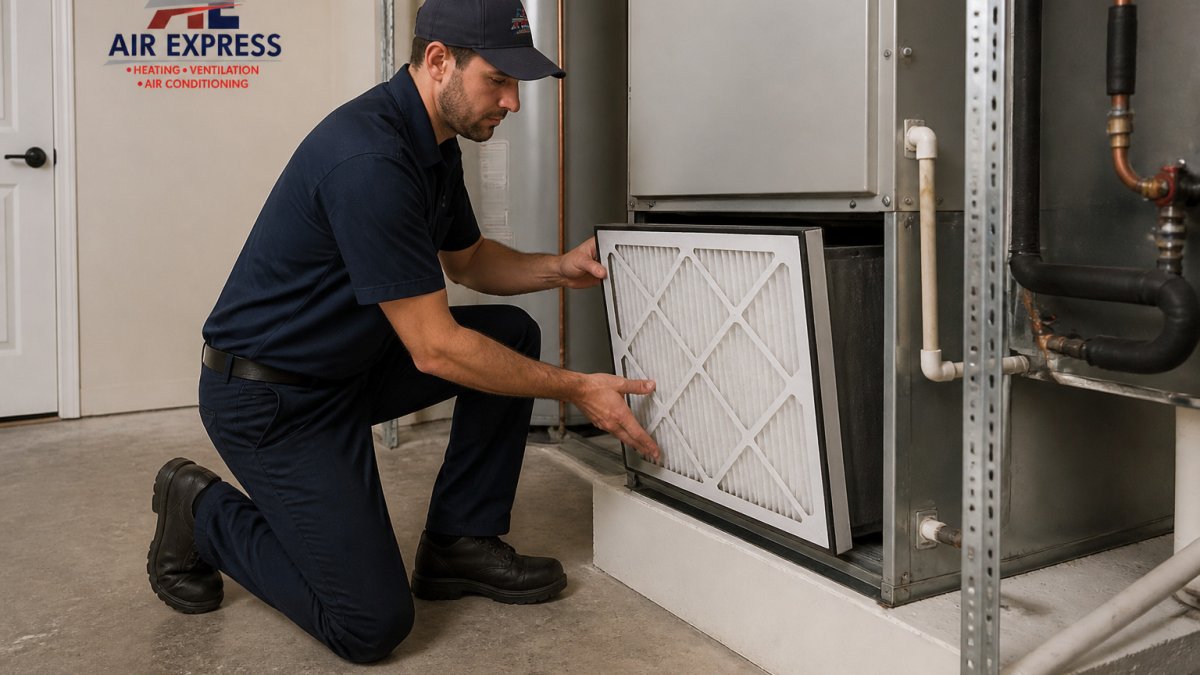
Air purifiers are not a complete answer to VOCs. Standard HEPA filters capture particles, but gaseous VOCs pass through unless the unit includes activated carbon or another adsorbent. Carbon-based purifiers can reduce some VOCs, but their effectiveness depends on the filter quality, the room size and how often the filter is replaced. Our UV light air purifiers guide explains how those units work and whether they suit your home. Choosing the right unit size for the space matters as well, and a unit undersized for the room will not clean the air effectively. Our five-step guide to choosing the right air purifier size walks through the sizing process. Our guide to improving indoor air quality covers ventilation, filtration and humidity control in one place.
Whole-home approaches are often discussed as an alternative to portable units. Our seven benefits of whole-home air filtration systems outlines what these systems can add to a house.
Booking an Indoor Air Quality Check With Air Express HVAC
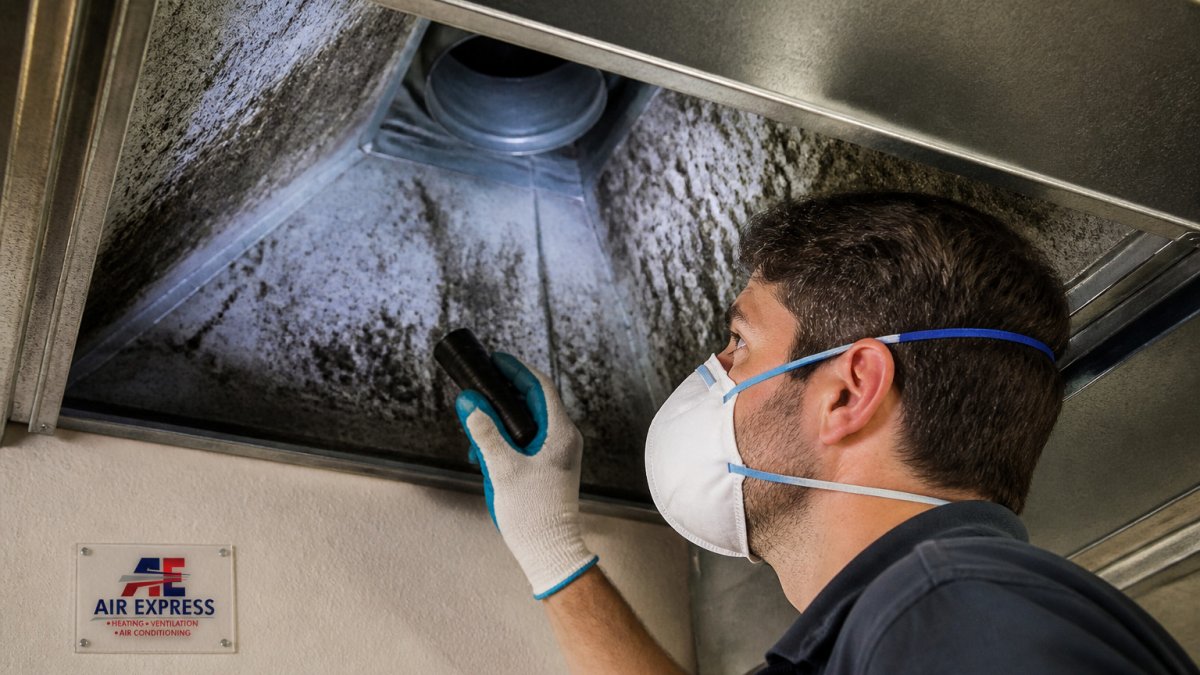
If you suspect VOCs are affecting your household, a professional evaluation can help you understand what may be present. Our team can assess ventilation, filtration and the HVAC equipment that moves air through your home. Our work is backed by a 10-year worry-free parts and labor guarantee.
GIVE US A CALL.
Frequently Asked Questions
What are the dangers of VOCs in the home?
Volatile organic compounds are gases released by paints, cleaning products, furniture, and building materials. Indoor concentrations can be substantially higher than outdoor levels, according to LA Fire Health, which reports indoor VOC levels often running about 10 times outdoor concentrations. A 2024 review identified formaldehyde as the largest contributor to estimated cancer and noncancer risks from residential VOC exposure. Health risk depends on how much is present, how long exposure lasts, and how often a person breathes it, so the specific danger varies by household.
What symptoms can exposure to VOCs cause?
Chronic VOC exposure has been linked in recent research to respiratory, neurological, and cardiovascular effects, according to a 2026 article in Scientific Reports. Common complaints reported by people in poorly ventilated spaces include headaches, eye, nose, or throat irritation, dizziness, and fatigue. Symptoms that persist, worsen, or appear mainly at home and ease when you leave should be evaluated by a physician.
Can HVAC systems help reduce VOCs indoors?
Proper ventilation is one of the most effective ways to lower indoor VOC levels, because it replaces stale indoor air with fresh outdoor air. A correctly sized and maintained HVAC system with clean filters supports that air exchange. Call us for a quote, since pricing depends on the system and the work required.
How long do VOCs stay in a house?
Many VOCs are released most heavily in the first months after new paint, flooring, or furniture is installed. A study of four newly built houses measured VOC concentrations and ventilation rates over the first 2 to 9.5 months after construction, reflecting how emissions decline over time. Ventilation shortens how long compounds linger, so opening windows when safe and running fresh-air systems helps.

Comments