10 Common Causes of a Burning Smell From Your AC

Last Updated: November 8, 2026
Quick Summary
A burning smell from AC is often dust burning off the heat strips, coils, or blower after the system has been idle, and it usually fades within 15 to 30 minutes. A smell that keeps returning, grows stronger, or smells electrical or like hot plastic points to a problem that needs a technician, and you should turn the system off first.
A dusty smell that fades within 15 to 30 minutes after startup is usually harmless.
Turn the thermostat to OFF and switch the breaker off if the smell is electrical or plastic-like.
Check the air filter monthly during heavy use and replace it when it looks gray or dense.
Keep at least two feet of clear space around the outdoor condenser unit.
A rotten egg or sulfur smell is a gas warning: leave the home and call 911 from outside.
Smell Something Burning From Your AC?
Air Express HVAC LLC offers 24/7 repair for all AC brands across Southwest Florida.
Table of Contents
Is a Burning Smell From Your AC Normal?
A burning smell from your AC is not always a sign of danger, but it should never be ignored.
Think of the smell as a signal. If you want to know how indoor air filtration options can help with air quality concerns, read UV light air purification for a closer look.
Use this quick guide to get started:
Mild dusty smell for a few minutes: Often normal after startup
Smell that fades within a day or two: Usually low risk, but keep watching it
Smell that keeps coming back: Needs a professional inspection
Burning smells rarely come from one single source. Knowing the common causes will help you narrow things down before the technician arrives.
Dust Burning Off After Startup or Seasonal Use
The most common reason for a burning smell is dust. When an AC sits unused for months, dust settles on the coils, blower, and heating elements.

This is most noticeable at the start of the cooling season in Southwest Florida. The smell often clears within 15 to 30 minutes. Open a window, run the fan on low, and check that it fades.
Common Causes of Burning Smell From AC Indoor Unit
The indoor unit, usually found in an attic, closet, or air handler room, is where many burning smells start. Two causes come up most often.
HVACR VIDEOS
Dirty or Clogged Air Filters
A dirty filter restricts airflow, letting dust and debris collect on the blower and coil. A clogged filter also makes the system work harder, raising component temperatures and producing a hot, dusty smell.
Check your filter monthly during heavy use and replace it when it looks gray or dense with dust. Filter replacement intervals depend on the filter type and how often the system runs.
Overheating Blower Motors
The blower motor pushes air through your home. When it overheats, the motor windings can give off a burning or electrical smell, often from worn bearings, a failing capacitor, or overwork.
If the smell comes with weak airflow, unusual noises, or the system shutting off, turn it off and call a technician. A neglected motor problem can lead to a complete breakdown.
Common Causes of Burning Smell From AC Outside Unit
The outdoor condenser unit can also produce burning odors. Here are the two main causes to watch for.
Electrical Faults and Overheated Connections
Loose or corroded wiring can overheat at connection points. Faulty contactors, relays, and capacitors can also create a burning plastic or electrical smell. This is one of the more serious causes.
Electrical faults can create a fire risk. Do not open the electrical panel or the outdoor unit's control box yourself. Turn the system off at the thermostat and breaker, then call a professional.
Debris and Blocked Airflow Around the Condenser
Leaves, grass clippings, and dirt can block airflow around the outdoor unit. Without proper airflow, the compressor and fan motor run hotter than they should, producing a burning odor.
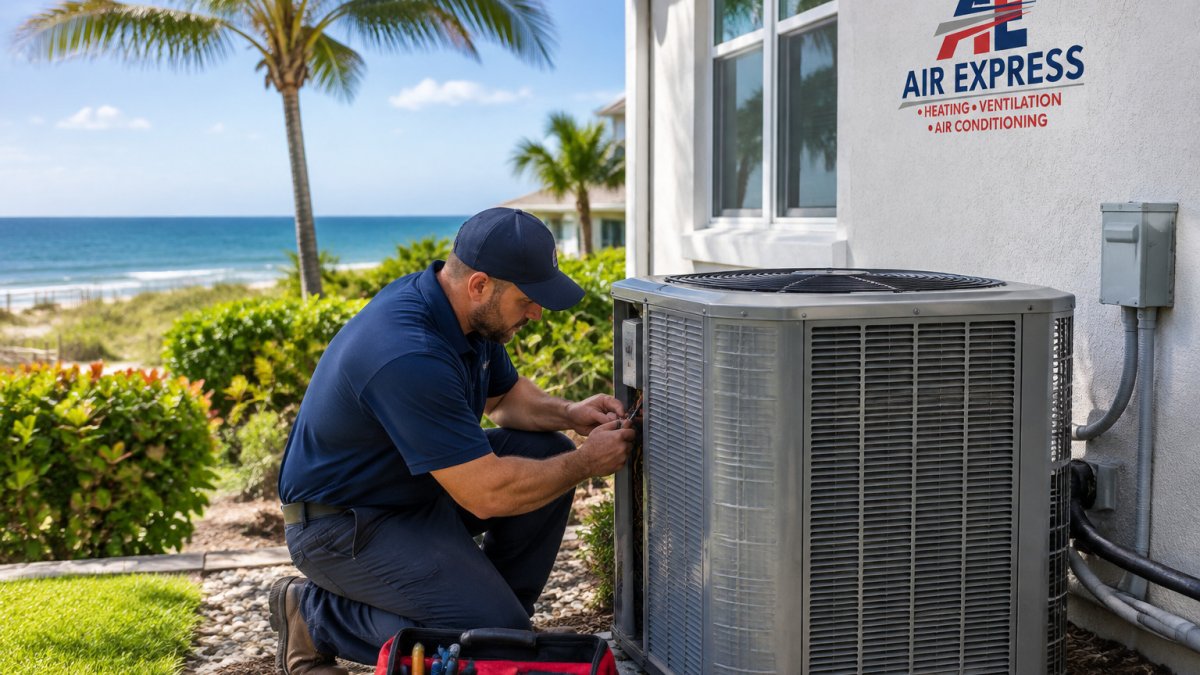
Keep at least two feet of clear space around the condenser. Rinse the fins gently with a garden hose and remove any debris you can reach safely.
Why You Smell Burning Through the AC Vents in the House
If the burning smell comes through your vents, the air is picking up odors from the system itself. Common reasons include:
Dust on the heat strips or blower
A dirty or damaged air filter
Mold or mildew in the ductwork or drain pan
Check the vents first. If you see dust or debris, carefully vacuum the vent covers. If the smell persists after cleaning the vents and replacing the filter, the source is probably inside the system and needs a technician.
Burning Smell From a Window AC Unit
Window units have their own risks. Because the whole system is in one box, dust, grease, and electrical parts sit close together. Burning smells often come from:
Dust collecting on internal heating elements
Overheated wiring or a failing fan motor
Blocked vents on the back or sides of the unit
Unplug the unit before inspecting it. Clean the front filter and clear the vents. If the smell remains, stop using the unit and have it inspected. Window units can also overheat when plugged into an outlet that cannot handle the load.
Normal Odor Versus a Dangerous Burning Smell
A burning smell is a symptom, not a diagnosis. The useful question is not just "is it burning?" but "what does it smell like, when does it appear, and how long does it last?" Use the descriptions below as a starting point, not a verdict, only an on-site technician can confirm the source.
Match the smell to the likely cause
Dusty or earthy, strongest in the first 15 to 30 minutes after startup: Usually dust burning off the heat strips, coils, or blower after disuse. Common at the start of the cooling season in Southwest Florida.
Hot plastic or rubber: Often points to an overheating blower motor, a failing capacitor, or wiring insulation getting hot at a loose connection. Treat this as a call-a-technician smell.
Metallic or oily, sometimes with a hot electrical tang: Can indicate an overheating motor, a failing compressor component, or a pitting contactor. These parts sit behind panels a homeowner should not open.
The timing tells you almost as much as the smell
Fades within 30 minutes of the first run of the season: Most likely dust. Note it, watch it, and replace the filter before the next run.
Comes back every time the system starts, then fades: Often dust or debris pulled into the airstream each cycle, check the filter and return grilles.
Gets stronger the longer the system runs: This pattern most often points to an overheating component. Turn the system off rather than letting it run to see if it clears.
Fort Myers conditions that change the risk picture
Southwest Florida's long cooling season, often running most of the year, means the system accumulates far more runtime than in a short-season climate. More runtime means more dust loading on filters and coils, more heat cycles on motors and contactors, and more chances for a marginal connection to loosen. Salt air near the coast can accelerate corrosion on outdoor electrical connections and cabinet hardware.
When the smell is an emergency, not a service call
Call 911 from outside the home if you see flames, smell gas, or see smoke that is not clearly coming from a single appliance you can shut off. Evacuate first; diagnose later.
The table below sorts the smells the article describes by likely cause and urgency, so you can tell a normal dusty odor from one that needs a technician.
Smell | Likely cause | Action |
Dusty or earthy, first 15-30 minutes | Dust burning off heat strips, coils or blower | Note it, watch it, replace the filter |
Hot plastic or rubber | Overheating blower motor, failing capacitor, hot wiring connection | Call a technician |
Metallic or oily, hot electrical tang | Overheating motor, compressor component or pitting contactor | Call a technician |
Fishy or ammonia-like | Failing electrical components or refrigerant issue | Shut down and have it checked |
Rotten egg or sulfur | Possible gas leak | Leave the area, call gas utility or 911 |
Musty or mildew-like | Clogged condensate drain, wet drain pan, damp duct insulation | Address moisture problem |
What to Do Right Now and Booking a Fort Myers Service Call
If you smell something burning from your AC, the order of operations matters more than the individual steps. Work through this sequence, and stop at the first step that tells you to leave or call for emergency help.
Step 1: Decide whether this is an emergency
Leave the home and call 911 from outside if you see flames, see or smell smoke that is not clearly from one appliance you can shut off, or smell gas (rotten egg or sulfur). Do not stop to gather belongings, and do not flip light switches on your way out. A burning smell without smoke, gas odor, or visible scorch marks is urgent but not an emergency, move to Step 2.
Step 2: Shut the system down the right way
Set the thermostat to OFF, not just a higher temperature. Off stops the call for cooling and, on most systems, the indoor blower.
Switch the breaker off at the electrical panel if the smell is strong, electrical, or plastic-like, or if you cannot tell where it is coming from. Label the breaker so you know which one to restore later.
For a window unit, unplug it rather than relying on the dial or remote.
Open windows and doors to ventilate, and keep people and pets out of the area until the odor clears.
Never open the outdoor unit's electrical panel, the air handler's control box, or the furnace cabinet to "take a look." Capacitors can hold a dangerous charge after the power is off, and the wiring inside is not a homeowner inspection area.
Step 3: Do the safe homeowner checks only
These are the checks that do not require opening a panel or touching electrical parts:
Air filter: Pull it, hold it up to a light, and replace it if it is gray, matted, or dense with dust. Filter replacement intervals vary by filter type and how often the system runs.
Return and supply grilles: Vacuum loose dust and pet hair from the covers. Make sure furniture, rugs, or boxes are not blocking returns.
Outdoor unit clearance: Keep at least two feet of clear space around the condenser. Remove leaves, grass clippings, and debris you can reach without tools.
Do not attempt to clean coils with anything other than a gentle rinse from a garden hose on the outdoor unit, and do not remove panels to reach the indoor coil or blower. Those tasks belong to a technician.
Step 4: Book a service call, and know what to expect
If the smell returns after the filter change and safe checks, or if it was electrical or plastic-like from the start, call a licensed HVAC contractor.
Pricing depends on the failed part and system configuration, so ask for a written estimate before work begins. For an older system, ask the technician to weigh repair cost against replacement.
Step 5: Prevent the next one
Schedule a maintenance visit before the cooling season, change filters on a calendar reminder, keep two feet of clearance around the condenser year-round, and after any storm-related outage, listen and smell for changes on the first restart.
Air Express HVAC LLC provides 24/7 service across Southwest Florida. We service all brands, makes, and models. Give us a call.
Frequently Asked Questions
Is it normal to smell a burning scent from your AC?
A brief burning odor when the AC first starts up for the season is common. Dust and debris that settled on the heating elements or blower over months can burn off in the first hour of operation, and the smell usually fades within a short time. A burning smell that lingers, returns, or comes with smoke, unusual noises, or weak airflow is not normal and should be checked. In those cases, turn the system off and have a technician inspect it before running it again.
Should I turn off my AC if it smells like burning?
Yes. If the smell is strong, persistent, or accompanied by smoke, sparking, a hot electrical odor, or a tripped breaker, shut the system off at the thermostat and at the breaker or disconnect. Continuing to run an AC with a burning odor can damage the blower motor, wiring, or capacitor and create a fire risk. Once it is off, you can replace the filter and check for obvious blockages, then call for service before restarting it.
Can a dirty air filter cause a burning smell from an AC?
Yes. A clogged filter restricts airflow across the evaporator coil and blower, which makes the blower motor work harder and run hotter. Dust that collects on the motor and heating components can also burn off as the system heats up. Check your filter monthly during cooling season and replace it when it looks gray or clogged. If the smell goes away after a new filter and the system runs normally, the filter was the likely cause.
When should I call an HVAC technician about a burning smell?
Call a technician if the burning smell lasts more than a short startup period, returns after you clean the filter, or is accompanied by smoke, a melting plastic or hot electrical smell, buzzing, or breakers that trip. Also call if the house has a strong burning odor even with the AC off, since this can indicate an electrical problem. Air Express HVAC provides 24/7 service across Southwest Florida. Give us a call for an inspection.


Comments